Technology is a part of everyday life, and for today’s children, it’s as normal as books, toys, and playgrounds. From online learning and educational apps to video calls with family and entertainment, digital devices offer countless benefits. However, without healthy boundaries, excessive screen time can affect a child’s sleep, attention span, emotional well-being, and social development.
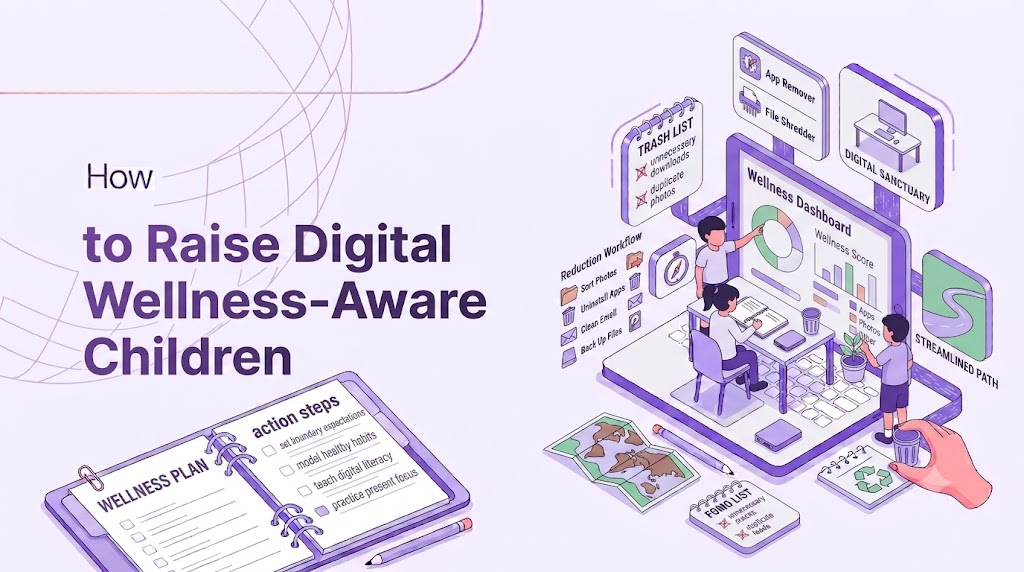
Raising digital wellness-aware children isn’t about banning technology—it’s about teaching them how to use it responsibly and mindfully. By helping children develop healthy digital habits early, parents can prepare them to navigate the online world with confidence and balance.
What Is Digital Wellness?
Digital wellness refers to maintaining a healthy relationship with technology. It means using digital devices in ways that support physical health, mental well-being, productivity, and meaningful relationships rather than allowing screens to dominate daily life.
Teaching children digital wellness helps them understand that technology is a tool, not a lifestyle.
Be a Positive Role Model
Children often copy what they see rather than what they’re told.
If parents constantly check their phones during meals or conversations, children are likely to adopt the same behavior. Instead, demonstrate healthy habits by putting your phone away during family time, limiting unnecessary screen use, and prioritizing face-to-face interactions.
Showing balanced technology use is one of the most effective lessons you can teach.
Create Family Screen Rules
Having clear and consistent guidelines helps children understand when and how technology should be used.
Consider setting rules such as:
- No phones during meals.
- No screens one hour before bedtime.
- Homework before entertainment.
- Screen-free family activities every weekend.
- Devices charged outside the bedroom overnight.
When everyone in the family follows the same rules, children are more likely to respect them.
Encourage Offline Activities
Digital wellness isn’t only about reducing screen time—it’s about creating meaningful alternatives.
Encourage children to explore hobbies like reading, drawing, cycling, playing sports, gardening, cooking, building puzzles, or learning a musical instrument. Outdoor play and creative activities improve problem-solving skills, boost confidence, and promote healthier physical and emotional development.
The more engaging offline experiences children have, the less dependent they’ll become on digital entertainment.
Teach Mindful Technology Use
Instead of telling children that screens are “bad,” teach them to ask thoughtful questions before picking up a device.
For example:
- Why am I using this device?
- Is this helping me learn or simply passing time?
- Have I spent enough time playing, reading, or being active today?
These simple questions help children become more intentional about their digital choices.
Talk About Online Safety and Kindness
Digital wellness also includes responsible online behavior.
Teach children to:
- Protect their personal information.
- Think before sharing photos or comments.
- Be respectful in online conversations.
- Recognize cyberbullying and report it.
- Ask for help if something online makes them uncomfortable.
Open conversations build trust and make it easier for children to seek guidance when needed.
Balance Learning and Entertainment
Not all screen time is equal.
Educational videos, coding games, digital art tools, and online learning platforms can provide valuable experiences. At the same time, endless scrolling or excessive gaming may not offer the same benefits.
Help your child balance educational technology with recreational use to make screen time more purposeful.
Schedule Regular Screen-Free Time
Create opportunities for the entire family to unplug together.
Ideas include:
- Family game nights
- Weekend walks
- Cooking meals together
- Reading sessions
- Nature outings
- Arts and crafts
These shared experiences strengthen relationships while reminding children that fun doesn’t always require a screen.
Final Thoughts
Raising digital wellness-aware children isn’t about eliminating technology from their lives—it’s about teaching them to use it wisely. By modeling healthy habits, creating consistent screen rules, encouraging offline activities, and maintaining open conversations about technology, parents can help children develop a balanced relationship with the digital world.
The goal isn’t to raise children who avoid technology, but to raise confident, thoughtful individuals who know when to connect online and when it’s time to disconnect and enjoy the world around them.
Leave a Reply