A single screen-free day each month is a manageable, repeatable way to reset your relationship with technology without committing to a drastic lifestyle change. The key word is “plan” — a screen-free day that isn’t set up in advance tends to collapse by 10am. Here’s how to make it actually work.
Choose the Right Day in Advance
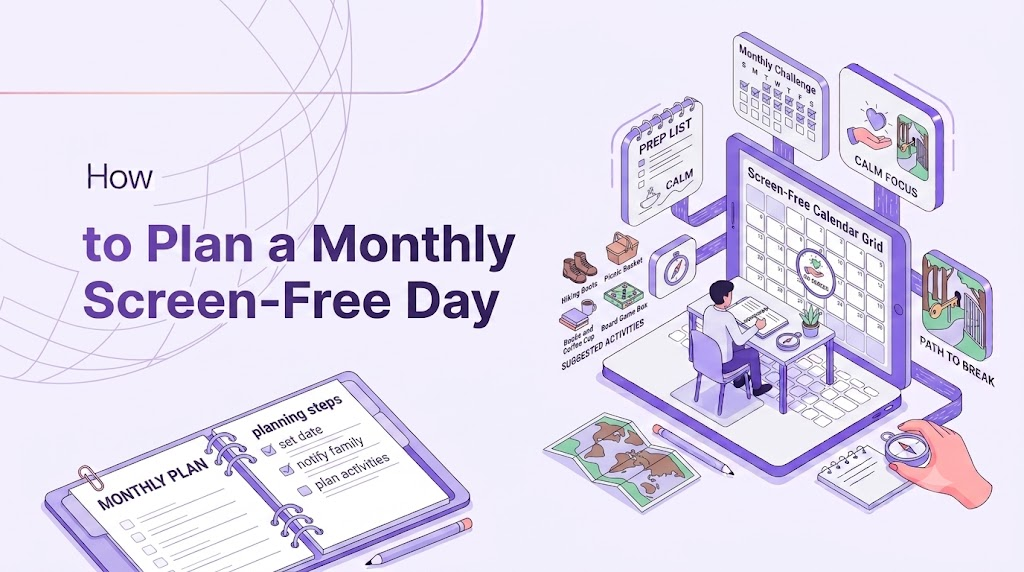
Pick a day at least a week ahead, ideally one without pressing deadlines, appointments requiring digital check-in, or events you’d need your phone for. Put it on a physical calendar or tell someone else about it — a spoken or written commitment is far easier to keep than a private, vague intention.
Handle Logistics the Night Before
Screen-free doesn’t mean “unreachable in an emergency.” The night before, tell close family or housemates you’ll be offline and give them another way to reach you if truly necessary. Set an auto-reply on email. Print or write down anything you might need — directions, a recipe, a phone number — so you’re not tempted to grab your phone “just this once.”
Decide What You’ll Do Instead
An empty day with no phone can feel disorienting if you haven’t planned anything to fill it. Choose two or three activities in advance: a hike, cooking a proper meal, seeing a friend in person, working on a hobby. Having a loose plan prevents the boredom that often sends people straight back to their screens.
Set Physical Boundaries for Your Devices
Put your phone, tablet, and laptop in a drawer, a box, or another room entirely — somewhere retrieving them takes real effort. If you use your phone as an alarm clock, buy a cheap standalone alarm clock for the day, or borrow one, so there’s no reason to touch your phone first thing in the morning.
Allow Necessary Exceptions, But Define Them Narrowly
If you truly need GPS for a planned drive, or a phone for a scheduled call, decide that in advance and treat it as the exception, not the rule. Vague exceptions (“I’ll just check if anything’s urgent”) are how screen-free days quietly become screen-light days instead.
Notice How You Feel, Not Just What You Did
At the end of the day, take a few minutes — with pen and paper, not a notes app — to jot down how you felt. Restless in the morning and calmer by afternoon is a common pattern. Tracking this over several months shows you real progress that a single day alone won’t reveal.
Make It a Standing Appointment
The first screen-free day is the hardest; the fifth is much easier because your brain has a template for what to expect. Put a recurring reminder on your calendar — first Sunday of the month, for example — so it becomes a fixture rather than something you have to talk yourself into every time.
A monthly screen-free day isn’t about proving you can survive without your phone for 24 hours. It’s a regular checkpoint that keeps your daily screen habits from drifting further than you’d choose if you stopped to think about it.
Leave a Reply