Category: Digital Wellness & Mindset

  • How to Make Screen-Free Time Fun for Everyone

    How to Make Screen-Free Time Fun for Everyone

    In today’s digital world, screens are everywhere. Whether it’s smartphones, tablets, laptops, or televisions, technology has become a regular part of our daily lives. While digital devices help us stay connected and entertained, spending too much time in front of a screen can reduce family interaction, affect sleep, and leave us feeling mentally drained.

    The good news is that screen-free time doesn’t have to feel boring or restrictive. With a little creativity, it can become the highlight of your day. By replacing screen time with enjoyable activities, you can strengthen relationships, encourage creativity, and create lasting memories with your loved ones.

    Why Screen-Free Time Matters

    Taking regular breaks from screens benefits both children and adults. It gives your eyes and mind a chance to rest while encouraging real-life conversations and experiences. Screen-free activities can also improve focus, reduce stress, and promote healthier habits.

    Instead of thinking about what you’re giving up, focus on everything you gain—more quality time, better communication, and opportunities to try something new.

    Turn Everyday Moments into Fun Activities

    You don’t need expensive equipment or elaborate plans to enjoy time away from screens. Everyday activities can become enjoyable when everyone participates.

    Try simple ideas such as:

    • Cooking a meal together
    • Baking homemade treats
    • Gardening
    • Organizing a picnic
    • Rearranging a room
    • Completing household projects as a team

    Working together creates opportunities to talk, laugh, and bond without digital distractions.

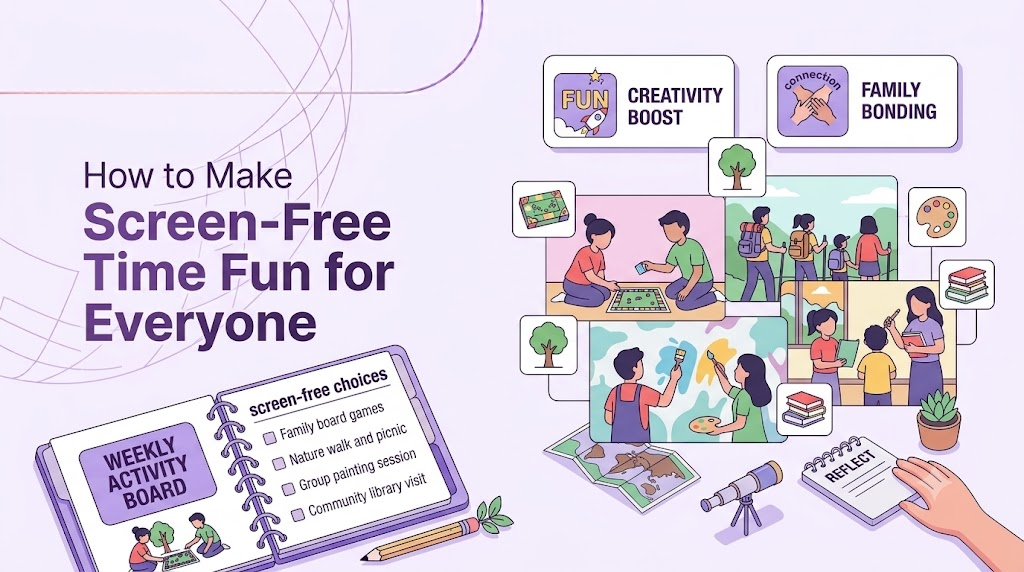
    Bring Out the Board Games

    Classic board games and card games are a great way to entertain the whole family. They encourage teamwork, problem-solving, and friendly competition.

    Games like chess, Uno, Scrabble, Monopoly, or even simple card games can keep everyone engaged for hours. Rotate games each week so everyone has a chance to choose a favorite.
    How to Make Screen-Free Time Fun for Everyone

    Get Moving Outdoors

    Fresh air and physical activity naturally reduce the desire to check phones.

    You could:

    • Go for a family walk
    • Ride bicycles
    • Play football or badminton
    • Visit a local park
    • Fly a kite
    • Explore a nearby nature trail

    Outdoor activities improve physical health while giving everyone a refreshing break from screens.

    Encourage Creative Hobbies

    Creativity helps people of all ages relax and express themselves.

    Consider activities like:

    • Drawing or painting
    • Building with LEGO or blocks
    • Making DIY crafts
    • Writing short stories
    • Playing a musical instrument
    • Learning origami
    • Solving puzzles

    Creative hobbies provide a sense of accomplishment and often become long-term interests.

    Create Weekly Screen-Free Traditions

    Having a regular offline tradition makes screen-free time something everyone looks forward to.

    Some ideas include:

    • Family game night every Friday
    • Screen-free Sunday mornings
    • Monthly camping trips
    • Evening storytelling sessions
    • Weekend cooking challenges

    Consistency helps build healthy habits and makes unplugging feel natural instead of forced.

    Let Everyone Choose an Activity

    People are more likely to enjoy screen-free time when they have a say in how it’s spent.

    Create a list of offline activities and let each family member choose one each week. Rotating responsibilities keeps things fresh and ensures everyone feels included.

    Keep Phones Out of Sight

    It’s much easier to stay engaged when devices aren’t constantly nearby.

    Place phones in a basket during family activities or leave them in another room. Without constant notifications, conversations become more meaningful and distractions fade away.

    Final Thoughts

    Making screen-free time fun isn’t about banning technology—it’s about creating experiences that are even more rewarding than scrolling through a phone. Whether you’re playing games, exploring the outdoors, cooking together, or discovering a new hobby, these moments help strengthen relationships and improve overall well-being.

    Start with just one screen-free activity each week and involve everyone in the planning process. Over time, you’ll find that disconnecting from devices creates more opportunities to connect with the people who matter most. The best memories are rarely made in front of a screen—they’re made through shared experiences, laughter, and quality time together.
  • How to Raise Digital Wellness-Aware Children

    How to Raise Digital Wellness-Aware Children

    Technology is a part of everyday life, and for today’s children, it’s as normal as books, toys, and playgrounds. From online learning and educational apps to video calls with family and entertainment, digital devices offer countless benefits. However, without healthy boundaries, excessive screen time can affect a child’s sleep, attention span, emotional well-being, and social development.

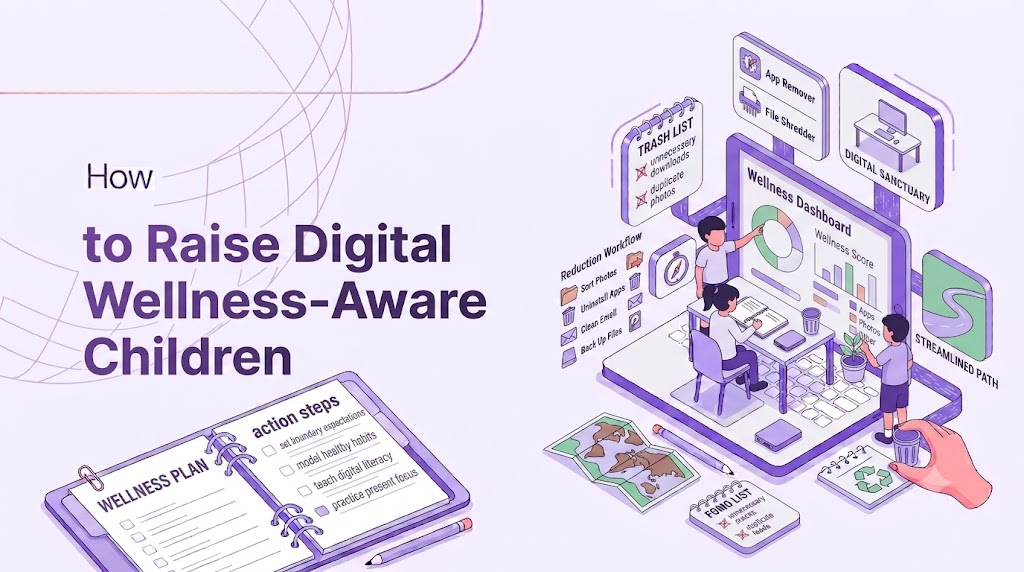
    Raising digital wellness-aware children isn’t about banning technology—it’s about teaching them how to use it responsibly and mindfully. By helping children develop healthy digital habits early, parents can prepare them to navigate the online world with confidence and balance.

    What Is Digital Wellness?

    Digital wellness refers to maintaining a healthy relationship with technology. It means using digital devices in ways that support physical health, mental well-being, productivity, and meaningful relationships rather than allowing screens to dominate daily life.

    Teaching children digital wellness helps them understand that technology is a tool, not a lifestyle.

    How to Raise Digital Wellness-Aware Children

    Be a Positive Role Model

    Children often copy what they see rather than what they’re told.

    If parents constantly check their phones during meals or conversations, children are likely to adopt the same behavior. Instead, demonstrate healthy habits by putting your phone away during family time, limiting unnecessary screen use, and prioritizing face-to-face interactions.

    Showing balanced technology use is one of the most effective lessons you can teach.

    Create Family Screen Rules

    Having clear and consistent guidelines helps children understand when and how technology should be used.

    Consider setting rules such as:

    • No phones during meals.
    • No screens one hour before bedtime.
    • Homework before entertainment.
    • Screen-free family activities every weekend.
    • Devices charged outside the bedroom overnight.

    When everyone in the family follows the same rules, children are more likely to respect them.

    Encourage Offline Activities

    Digital wellness isn’t only about reducing screen time—it’s about creating meaningful alternatives.

    Encourage children to explore hobbies like reading, drawing, cycling, playing sports, gardening, cooking, building puzzles, or learning a musical instrument. Outdoor play and creative activities improve problem-solving skills, boost confidence, and promote healthier physical and emotional development.

    The more engaging offline experiences children have, the less dependent they’ll become on digital entertainment.

    Teach Mindful Technology Use

    Instead of telling children that screens are “bad,” teach them to ask thoughtful questions before picking up a device.

    For example:

    • Why am I using this device?
    • Is this helping me learn or simply passing time?
    • Have I spent enough time playing, reading, or being active today?

    These simple questions help children become more intentional about their digital choices.

    Talk About Online Safety and Kindness

    Digital wellness also includes responsible online behavior.

    Teach children to:

    • Protect their personal information.
    • Think before sharing photos or comments.
    • Be respectful in online conversations.
    • Recognize cyberbullying and report it.
    • Ask for help if something online makes them uncomfortable.

    Open conversations build trust and make it easier for children to seek guidance when needed.

    Balance Learning and Entertainment

    Not all screen time is equal.

    Educational videos, coding games, digital art tools, and online learning platforms can provide valuable experiences. At the same time, endless scrolling or excessive gaming may not offer the same benefits.

    Help your child balance educational technology with recreational use to make screen time more purposeful.

    Schedule Regular Screen-Free Time

    Create opportunities for the entire family to unplug together.

    Ideas include:

    • Family game nights
    • Weekend walks
    • Cooking meals together
    • Reading sessions
    • Nature outings
    • Arts and crafts

    These shared experiences strengthen relationships while reminding children that fun doesn’t always require a screen.

    Final Thoughts

    Raising digital wellness-aware children isn’t about eliminating technology from their lives—it’s about teaching them to use it wisely. By modeling healthy habits, creating consistent screen rules, encouraging offline activities, and maintaining open conversations about technology, parents can help children develop a balanced relationship with the digital world.

    The goal isn’t to raise children who avoid technology, but to raise confident, thoughtful individuals who know when to connect online and when it’s time to disconnect and enjoy the world around them.

  • How to Reduce Digital Clutter on Your Devices

    How to Reduce Digital Clutter on Your Devices

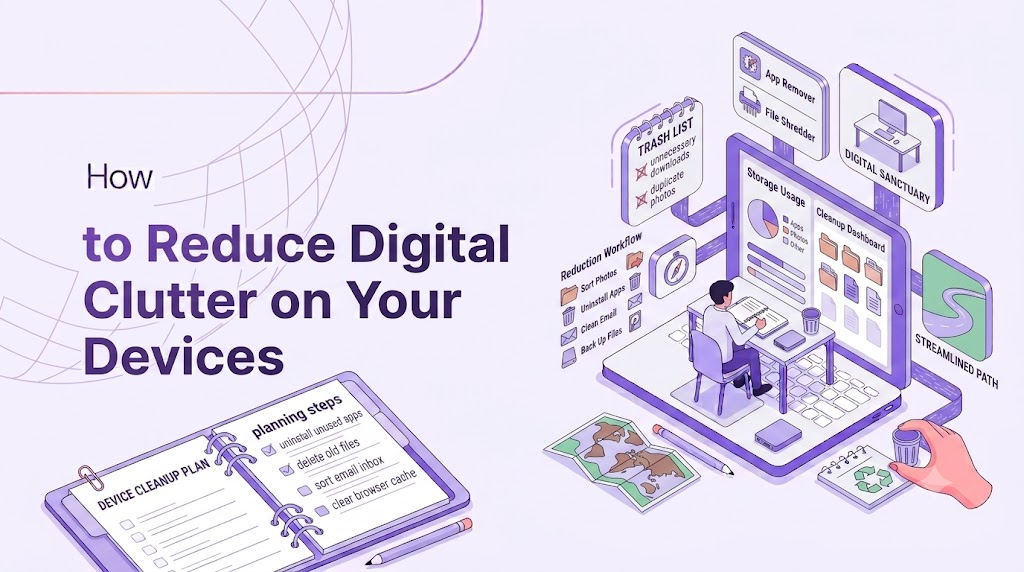
    Digital clutter works the same way physical clutter does — it accumulates quietly until your phone or laptop feels chaotic and slow, even when nothing is technically “broken.” Photos you’ll never look at, apps you forgot you installed, thousands of unread emails: all of it adds low-grade mental weight every time you open your device. Clearing it out is one of the most satisfying, low-effort forms of digital detox.

    Start With Your Home Screen

    Your home screen is prime real estate, and most people fill it with far more than they use. Keep only the apps you open daily. Everything else goes into folders or off the front screen entirely. A calmer home screen means less visual noise every single time you unlock your phone.

    Delete Apps You Haven’t Opened in 90 Days

    Most phones let you check last-used dates in Settings. Anything untouched for three months is very unlikely to be missed. If you need it again later, redownloading takes thirty seconds — there’s no real cost to deleting now.

    How to Reduce Digital Clutter on Your Devices

    Tackle Your Photo Library in Short Bursts

    Thousands of near-duplicate photos and screenshots are one of the biggest clutter sources. Rather than trying to sort your entire library in one sitting, spend 10 minutes a day swiping through and deleting blurry shots, duplicates, and old screenshots you no longer need. It adds up faster than it feels like it should.

    Unsubscribe Instead of Just Deleting Emails

    A cluttered inbox usually isn’t a filing problem — it’s a subscription problem. Instead of repeatedly deleting the same newsletter, use your email provider’s “unsubscribe” link or a bulk-unsubscribe tool. Fewer emails coming in means less clutter to manage going forward, not just today.

    Clear Out Your Downloads Folder

    Downloads folders quietly become dumping grounds for PDFs, installers, and files you opened once and forgot about. Sort by date, delete anything you don’t recognize or need, and move the rest into properly labeled folders.

    Organize Cloud Storage With a Simple System

    If your Google Drive, iCloud, or Dropbox is a mess, you don’t need an elaborate system — just three or four broad folders (Work, Personal, Archive, Shared) are usually enough to make files findable again. The goal is reducing search time, not building the perfect taxonomy.

    Turn Off Notification Badges

    Little red numbers on app icons create a subtle, constant pressure to “clear” them, which pulls you into apps you didn’t intend to open. Turning off badge notifications for non-essential apps removes that pull and makes your device feel calmer just to look at.

    Make It a Recurring Habit, Not a One-Time Clean

    Digital clutter rebuilds itself quickly. A quick 15-minute tidy-up once a month — checking apps, photos, downloads, and subscriptions — keeps things from piling back up. Treat it like a small recurring chore, not a giant annual project.

    A decluttered device isn’t just neater to look at. It reduces the number of tiny decisions and distractions your brain has to process every time you pick up your phone, which is a real and measurable form of mental relief.